

A family vanilla farm in Tabanan, Bali
Vanilla, grown slowly by one family.
Grown, pollinated and cured by hand. Scroll, and watch one bean ripen. Gustu and his family plant, pollinate, cure and pack every bean themselves. Scroll, and watch one bean ripen.
How it started
When the pandemic emptied Bali and there was no other work, Gustu planted vanilla. Years later, the same vines carry the beans you can hold in your hand.
Vanilla is not a quick crop. A cutting needs two to three years before it flowers, and every bean takes about a year from flower to cured pod. Gustu learned it all on his own land, with his family next to him.
Today they show visitors around the garden, cure the beans at home and seal every bag with their own red sticker. Small, honest and very much by hand.
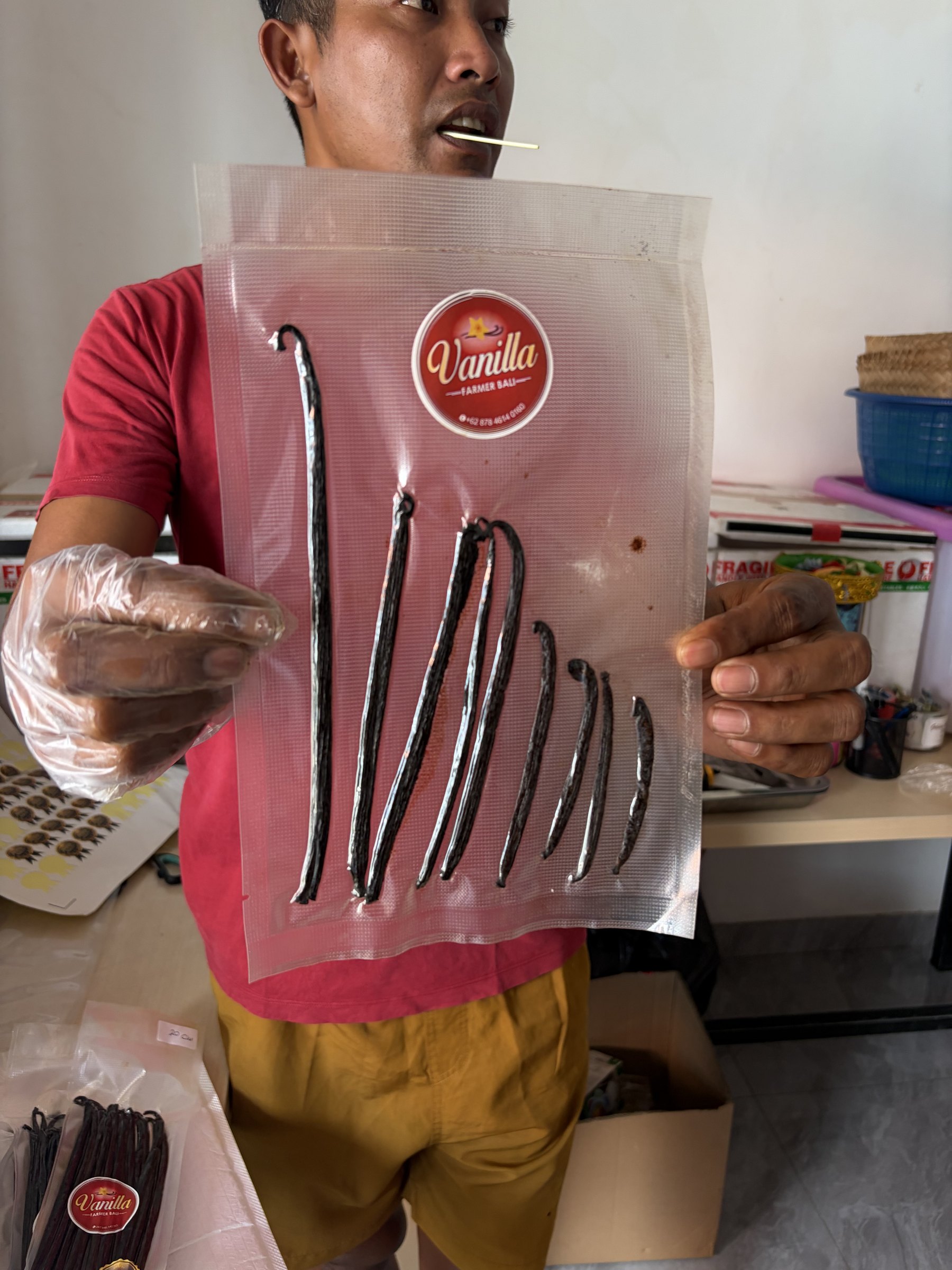
Gustu with one season's beans, from the longest to the shortest.
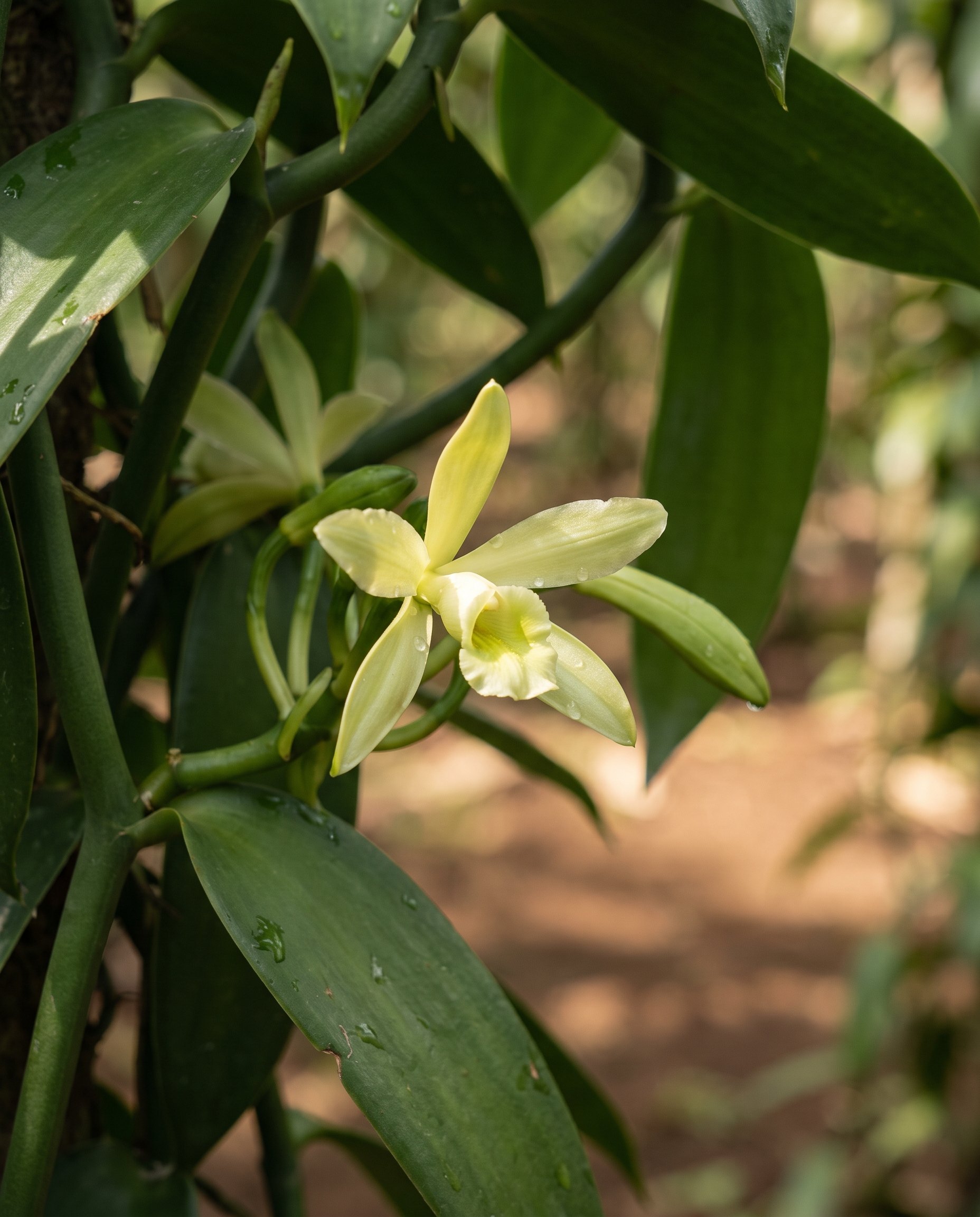
The vanilla flower
Open for one morning. Then it's gone.
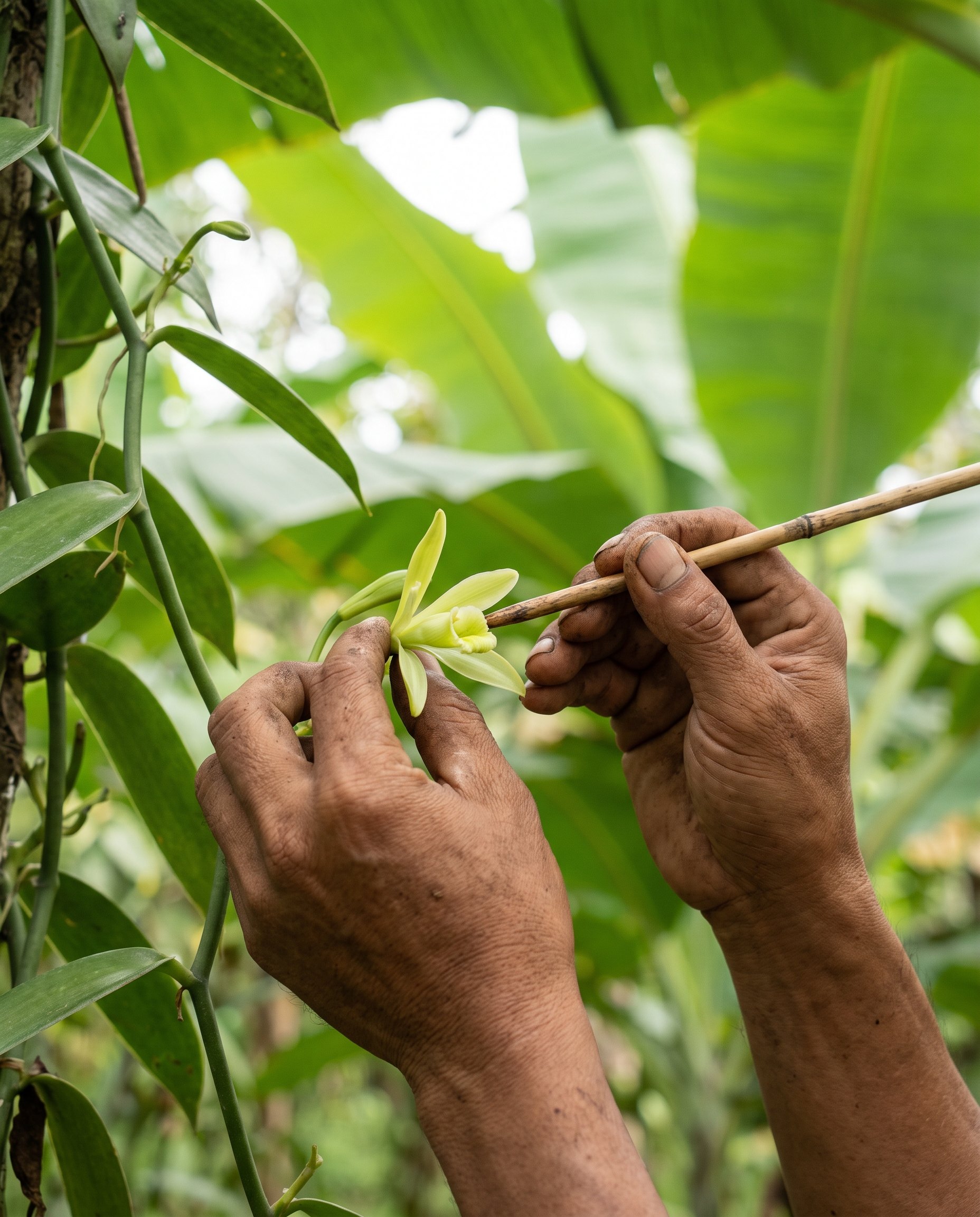
Every vanilla bean starts as an orchid flower that opens at sunrise and closes the same day. Nobody comes to pollinate it here, so the family does it themselves, flower by flower, with a bamboo stick.
Miss a morning, and that flower will never become a bean. That is why real vanilla costs what it costs.
From flower to bean
About a year of patience, in six steps.
- Flowering season
01
A flower for one morning
Vanilla is an orchid. Each pale yellow flower opens for a single morning and closes by the afternoon. If nothing happens, it simply falls.
- Early morning
02
Pollinated by hand
Far from its home in Mexico, almost no insect does this job. So the family walks the rows at sunrise and pollinates every flower by hand, with a thin bamboo stick.
-
 Month 1 to 9
 03
Nine months of growing
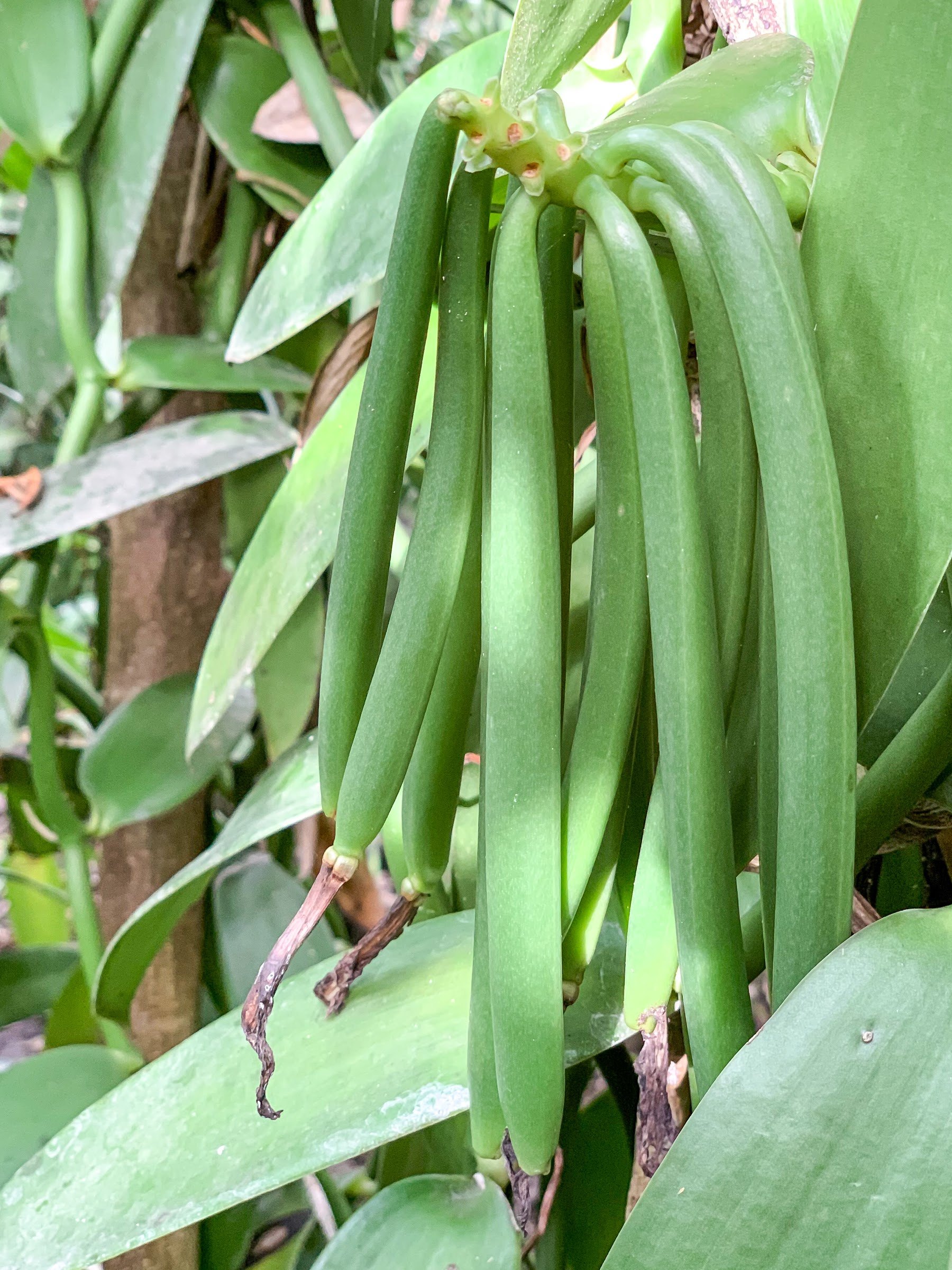
A pollinated flower becomes a green pod. It hangs on the vine for around nine months, in the half shade of the dadap trees the vines climb on.
-
 Harvest
 04
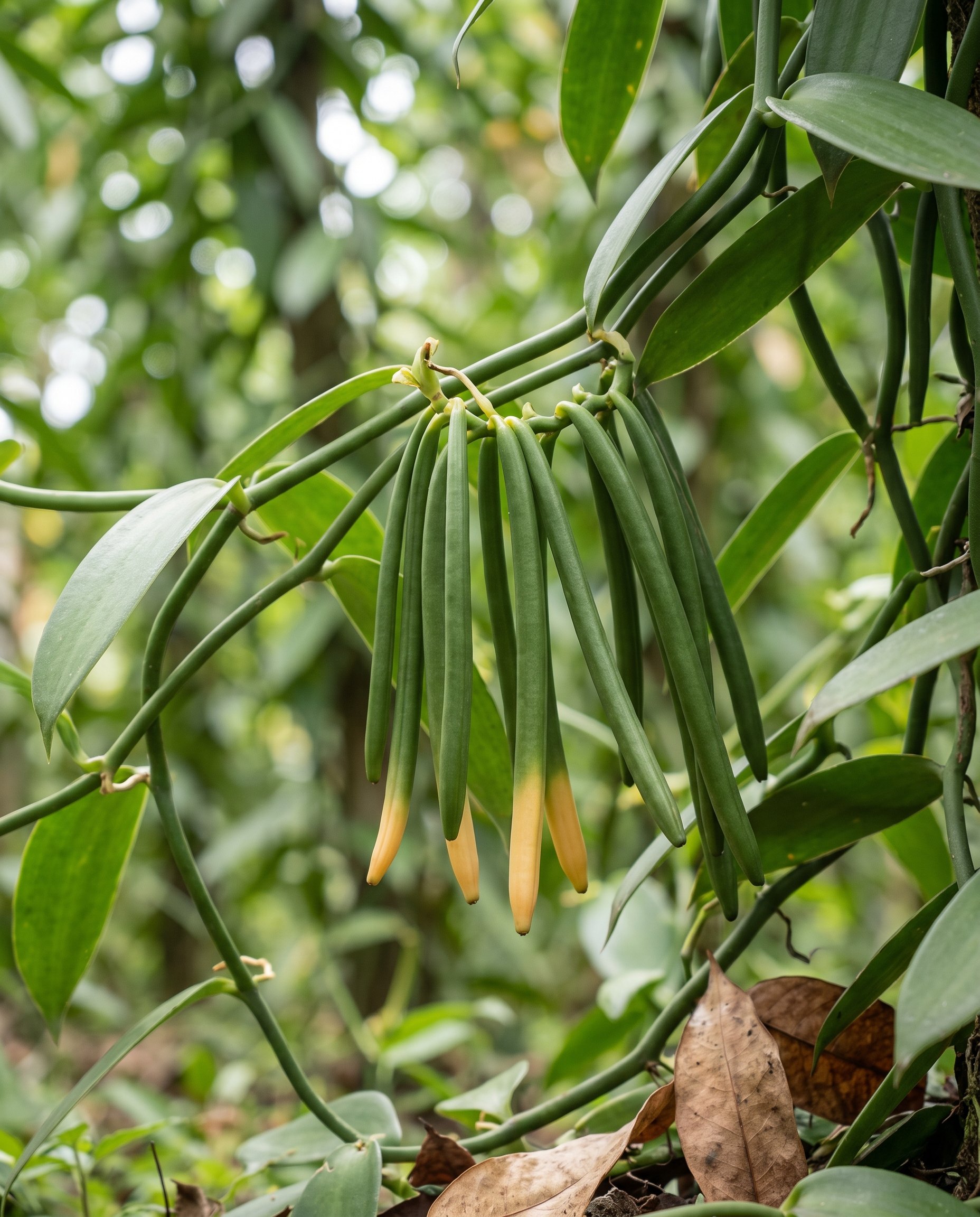
Picked when the tip turns yellow
A pod is ready when its tip starts to turn yellow. Picked too early, it never gets its full taste. So the pods are picked one by one, not all at once.
-
 Weeks of curing
 05
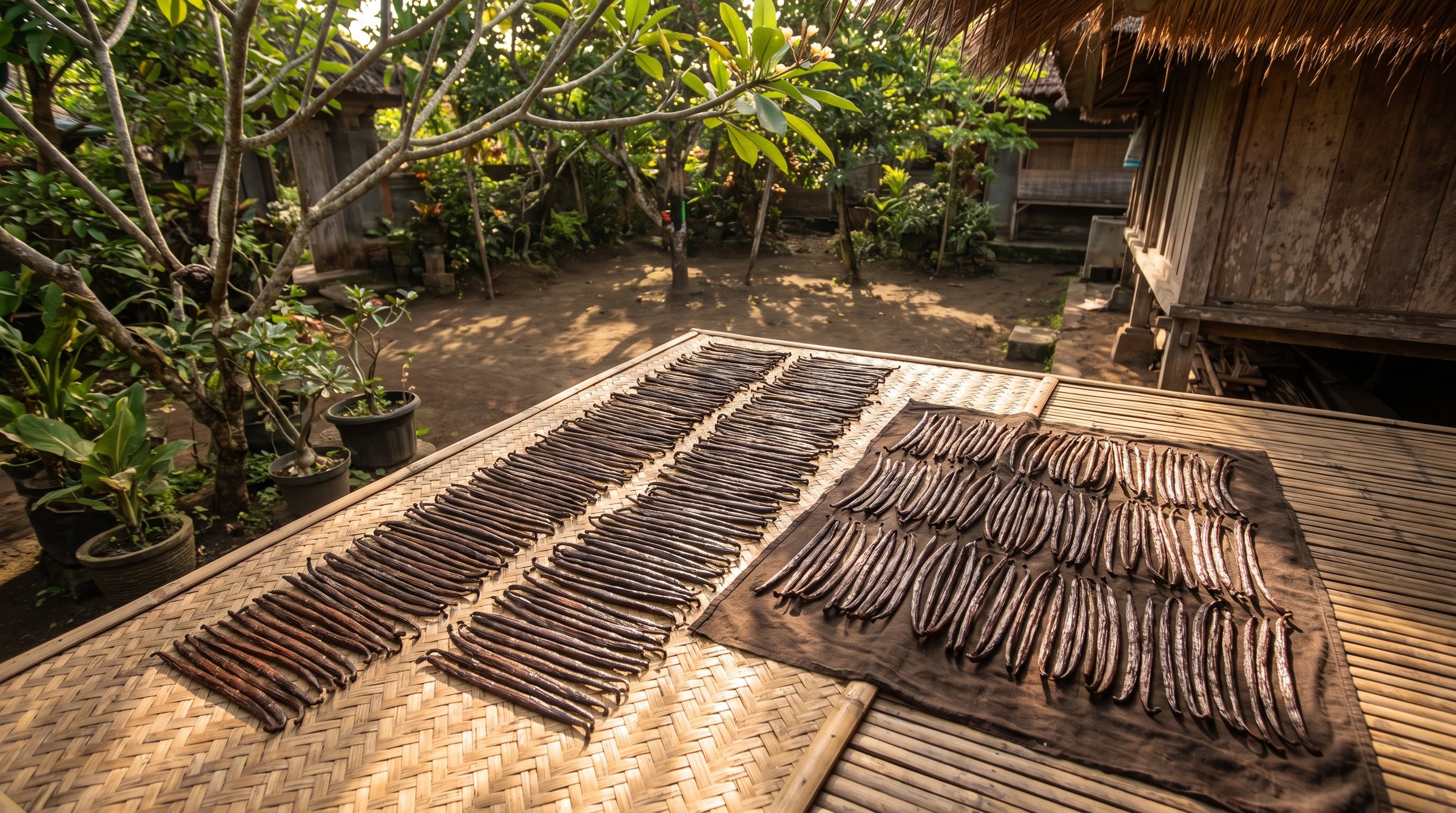
Sweating and sun
Fresh vanilla has no smell at all. The pods are wrapped to sweat, then laid out in the sun for a few hours a day and wrapped again. Slowly they turn brown, soft and fragrant.
-
 Months later
 06
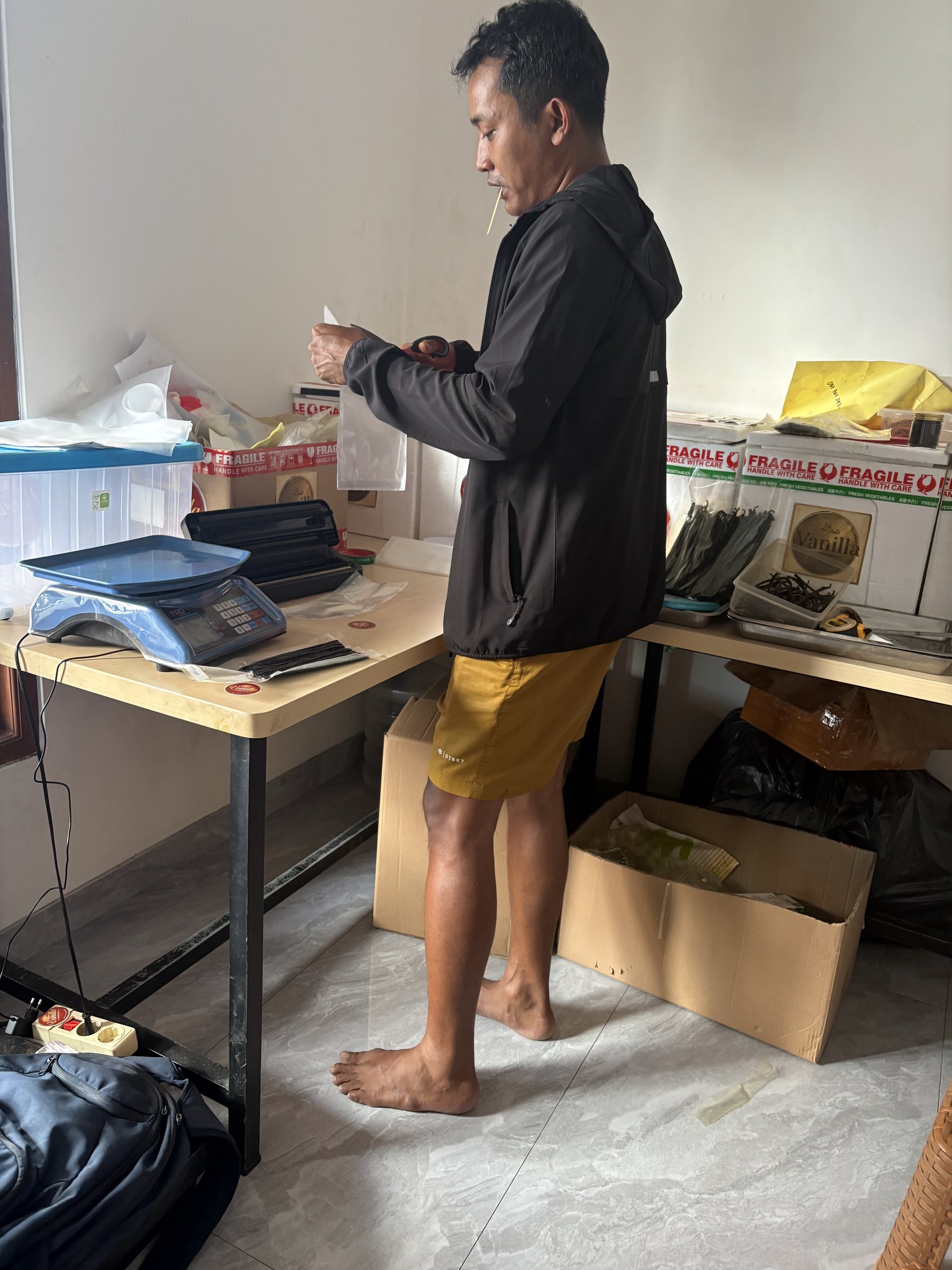
Rested, sorted, packed
After drying, the beans rest so the flavour can settle. Then Gustu sorts them by length, counts them into bags and seals each one at home.
In his own words
Listen to Gustu, between the vines.
Recorded on a walk through the garden in October 2026. No script, no studio: just Gustu explaining his farm, with the wind in the microphone.
Recorded on the farm in October 2026. Sound on. Gustu speaks English; the subtitles are his own words.
Honest about the harvest
Four months without rain.
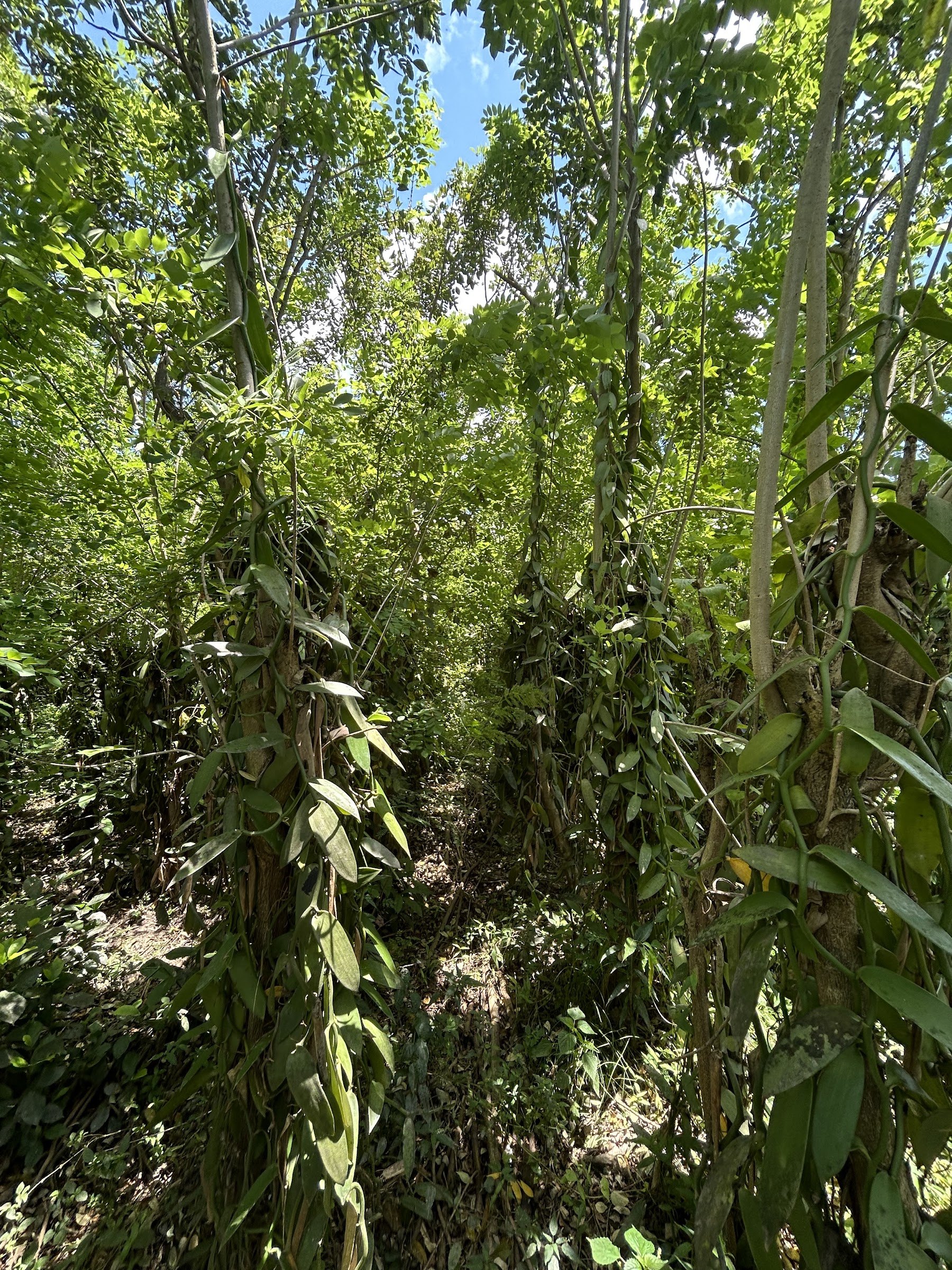
The rainy season should have started by now. It hasn't. Water here is shared through the subak, Bali's old irrigation system, where every block of land gets its turn. Gustu pumps a little extra by machine, but it is not much, and the vines feel it.
Every visit counts. Only a few travellers find this place. Each tour and each bag of beans goes straight to the family.
Quiet on purpose. It is not a tourist attraction and it does not want to be one. You get Gustu's time, not a show.
Fair, because it's direct. No buyer in between who sets the price. What you pay stays on this land.
The vanilla
Soft, oily and sorted by length.
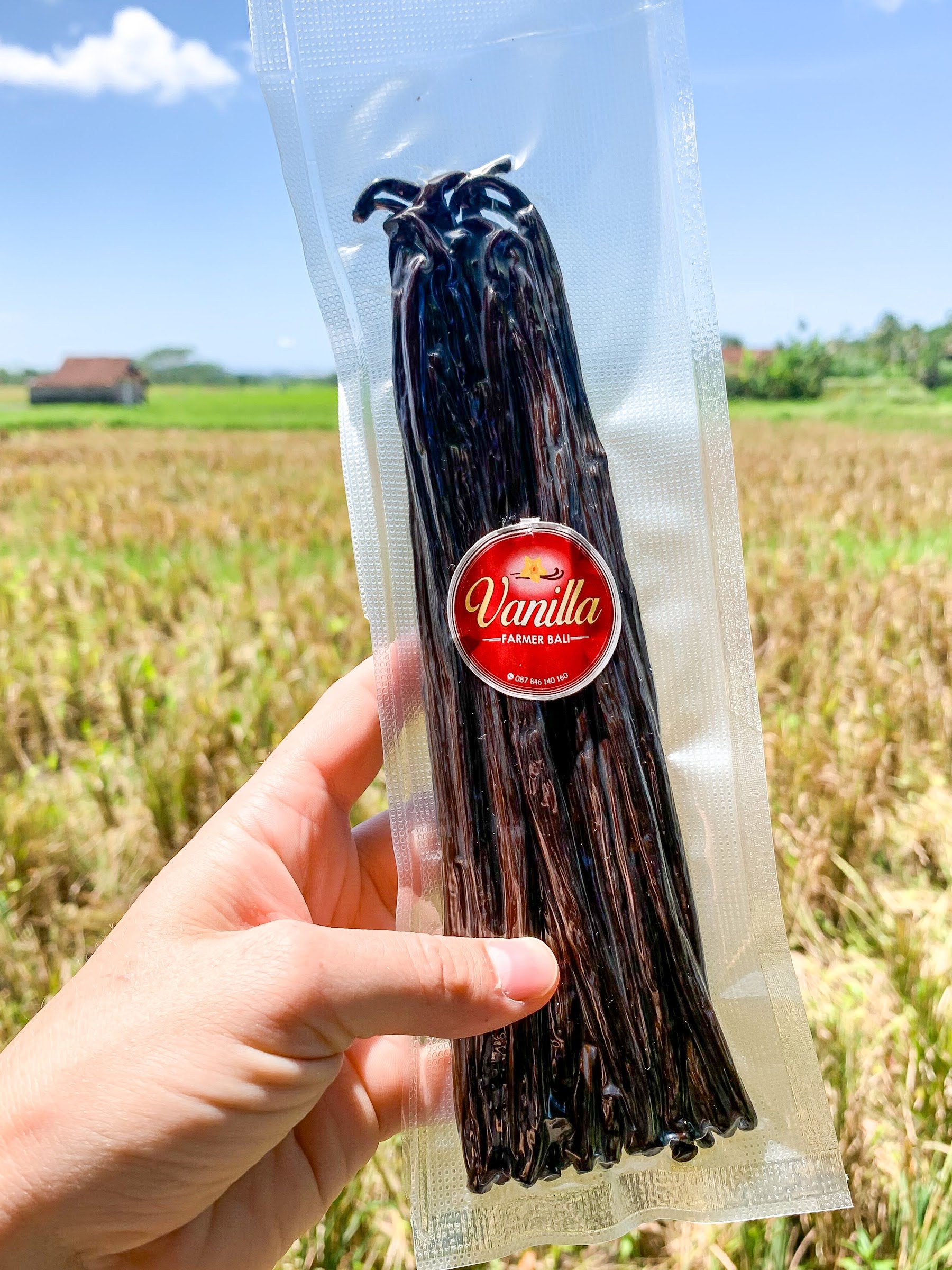
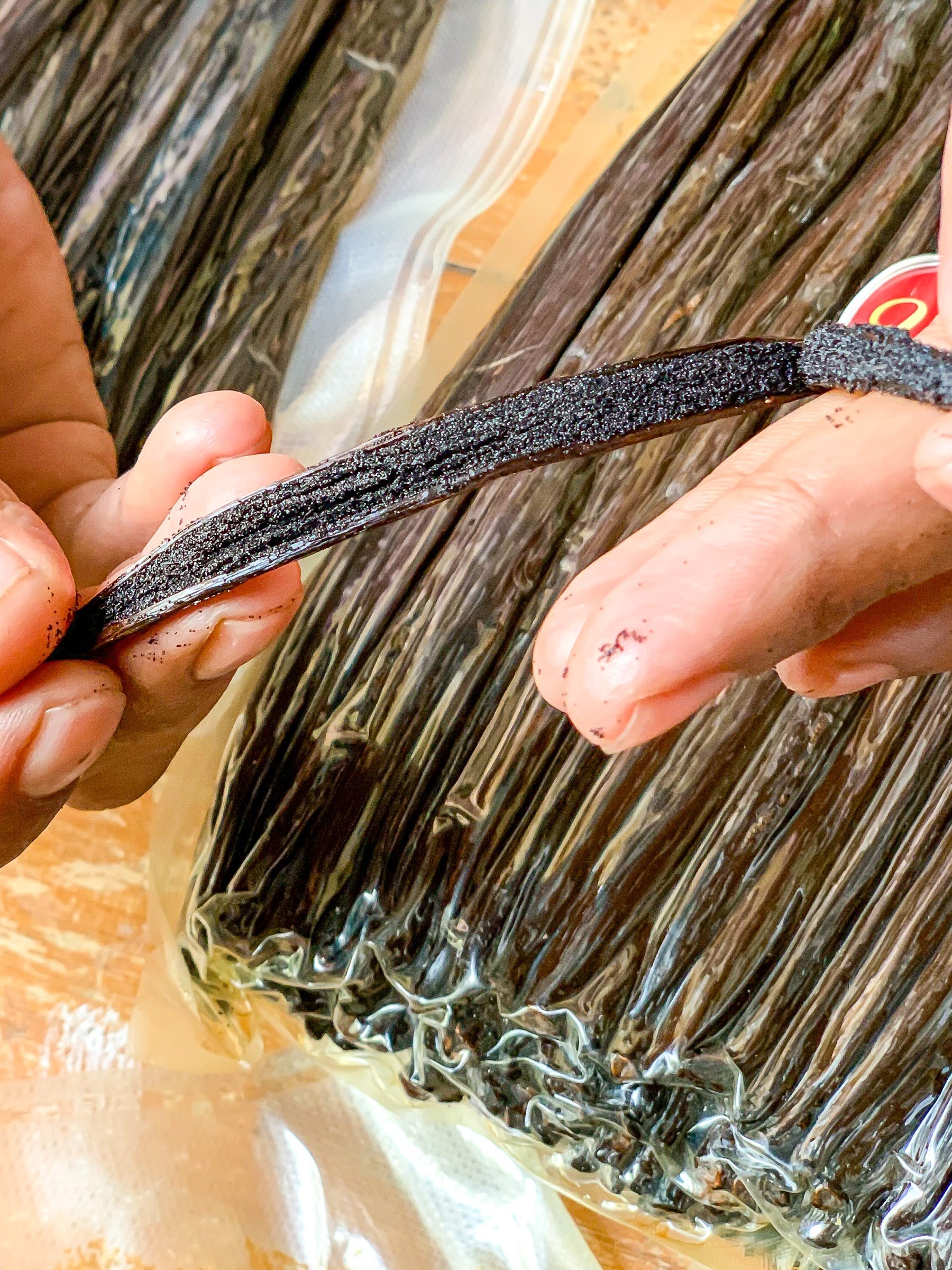
Gustu's beans are cured to stay supple, the way pastry chefs like them. He sorts every harvest by length, from short beans for sugar and extract to long, plump beans for desserts.
- Whole beansvacuum packed per length
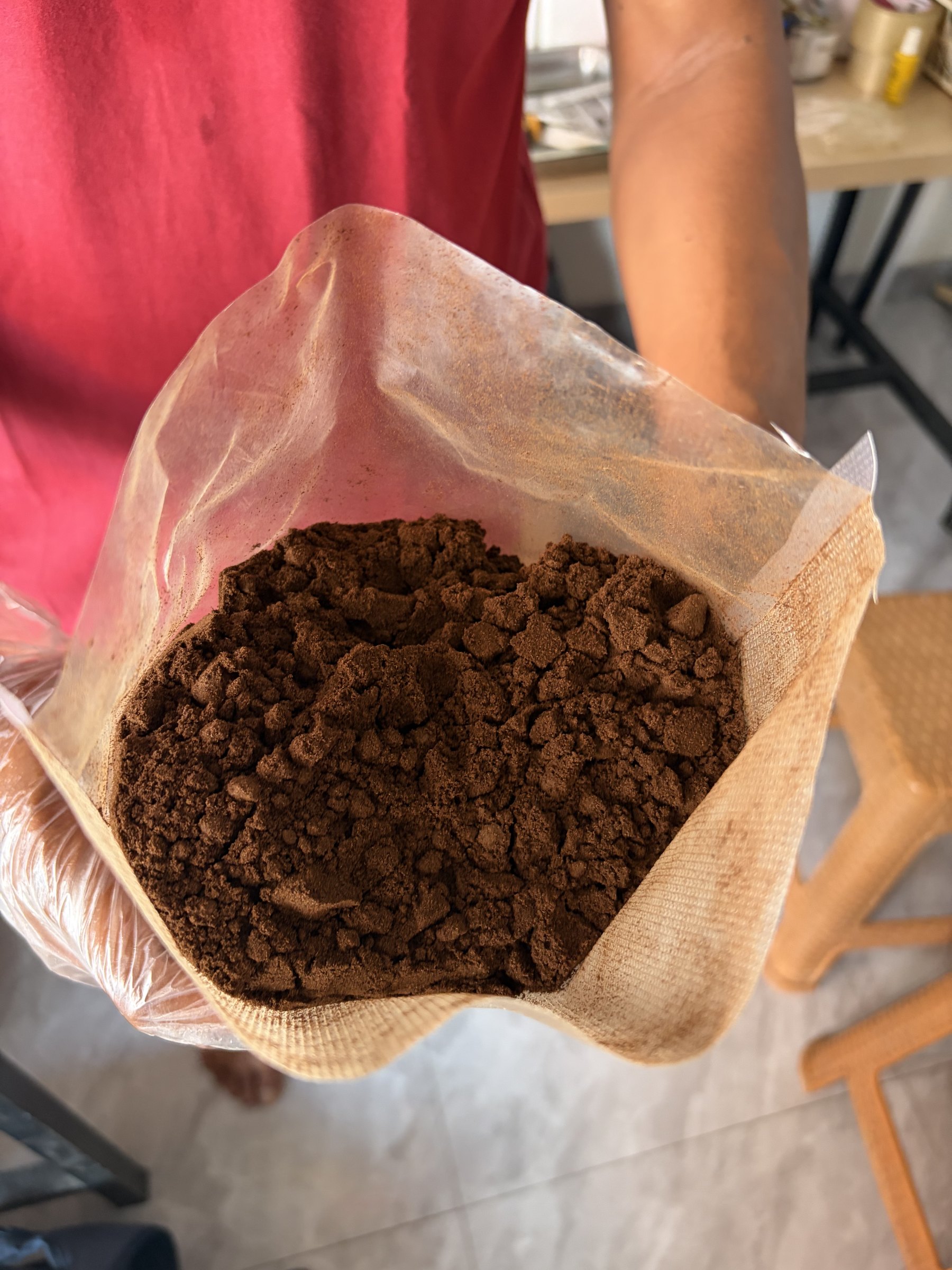
- Vanilla powderground from whole cured beans
What visitors say
Rated 4.8 by 55 guests on Google.
★★★★★
“I've rarely met someone who speaks with such passion about what they love: vanilla.”
Gustu is very knowledgeable and answered all our questions (and we had a lot of them!). As a pastry chef I was curious to learn more about one of the most precious spices used in pastries. I took some beautiful, high quality vanilla beans with me that were perfectly hydrated for baking and patisserie.
We had a lovely time at Gustu and Monica's vanilla farm! They were so welcoming and took us on a great tour where we learned how vanilla is grown and processed. Afterward, we enjoyed drinks and cookies while hearing about their amazing vanilla products.
He was very passionate and knowledgeable about everything to do with vanilla production. The experience in the vanilla plantation was one of the highlights of my Bali trip. I bought approx. 1 kg of vanilla pods and now returned home I can share that the vanilla is delicious and of high quality.
Visit the farm
Come for an hour. Leave knowing vanilla.
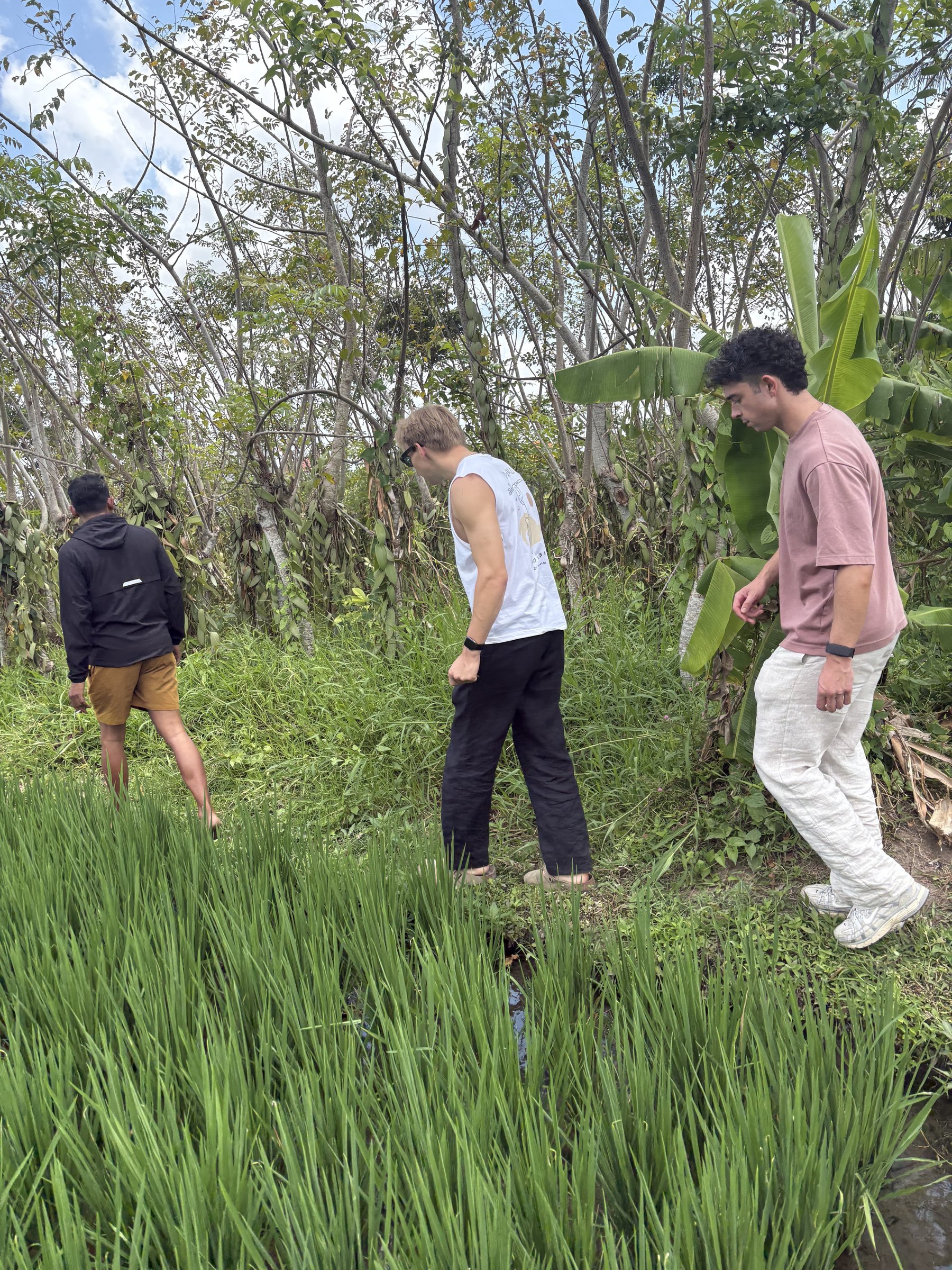
A walk through the garden, the whole story from flower to bean, a drink and something sweet afterwards. Send Gustu a message a day before, so someone is home.
- Where
- Kediri, Tabanan
- When
- Most days until 18:00